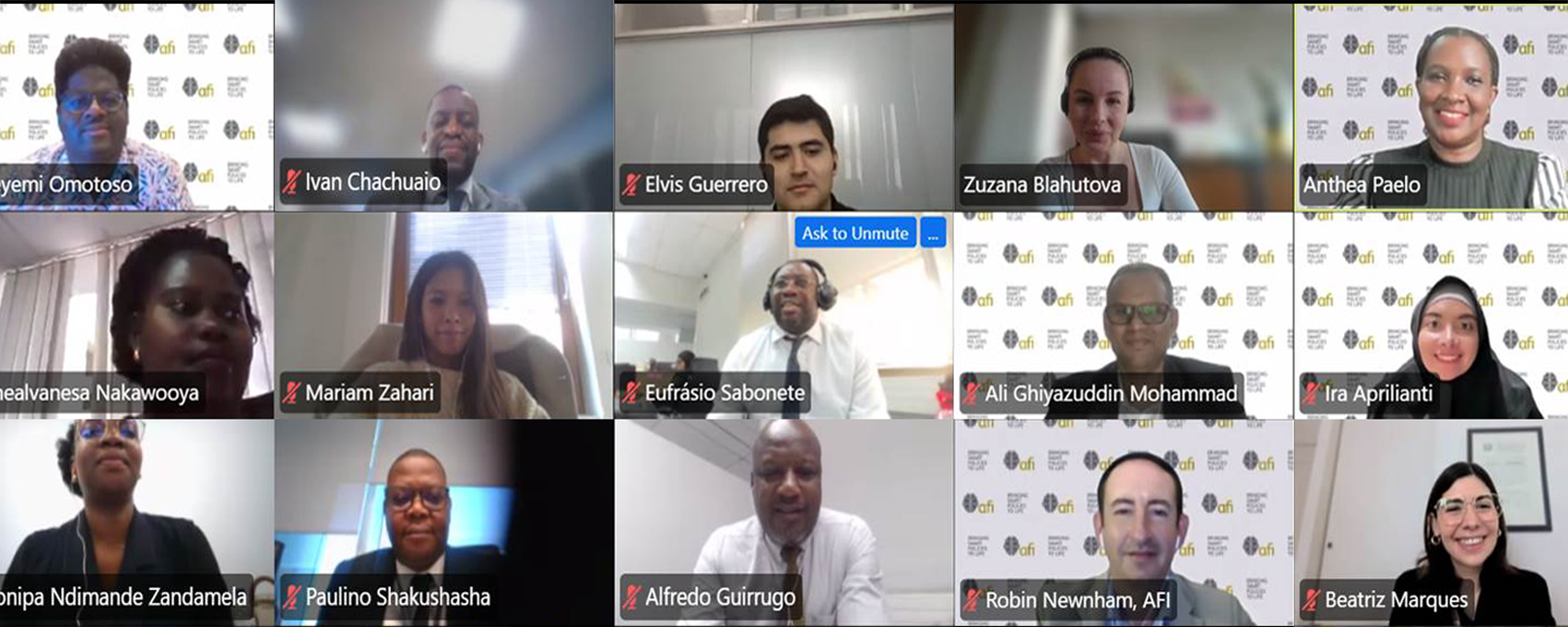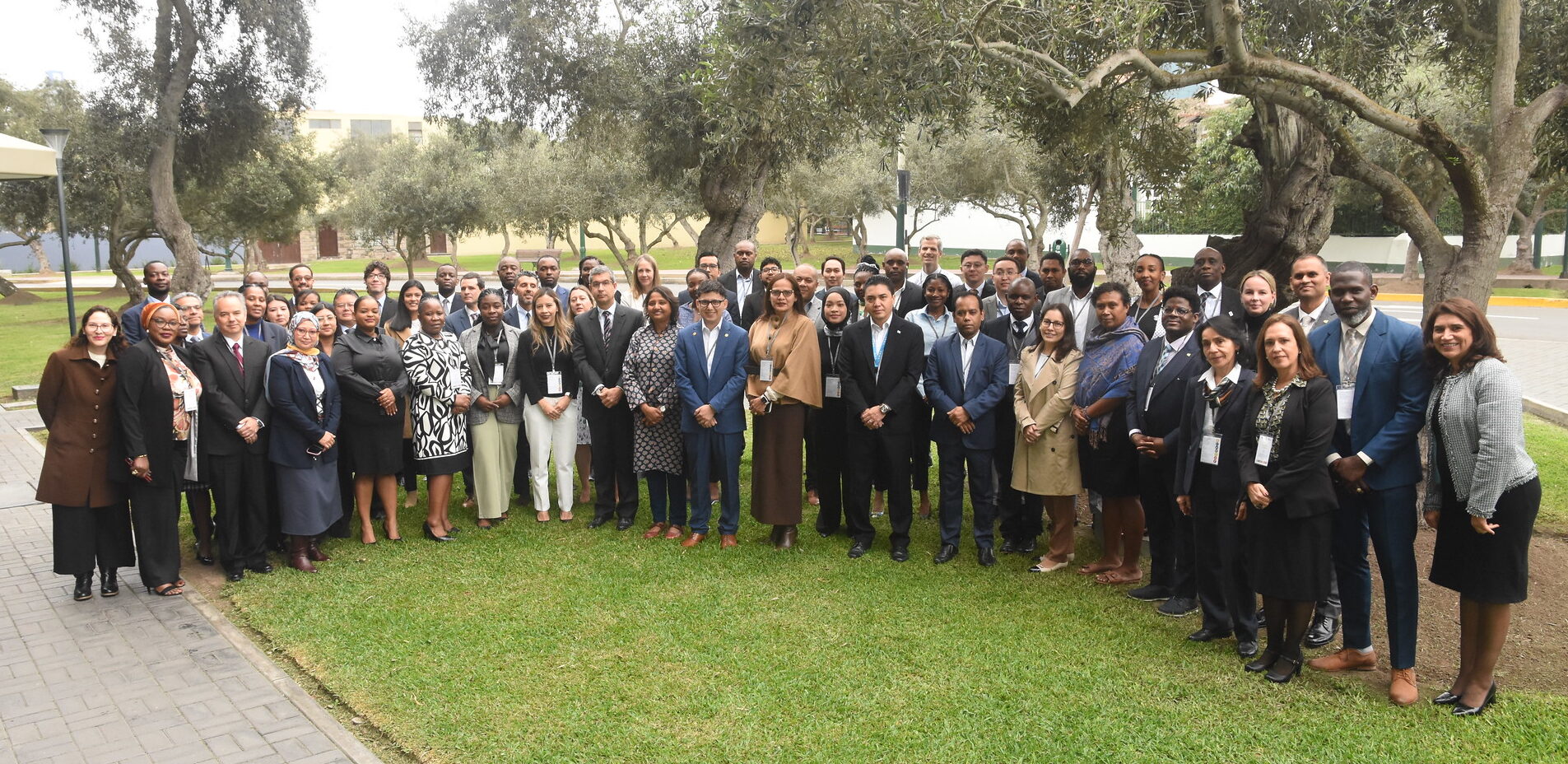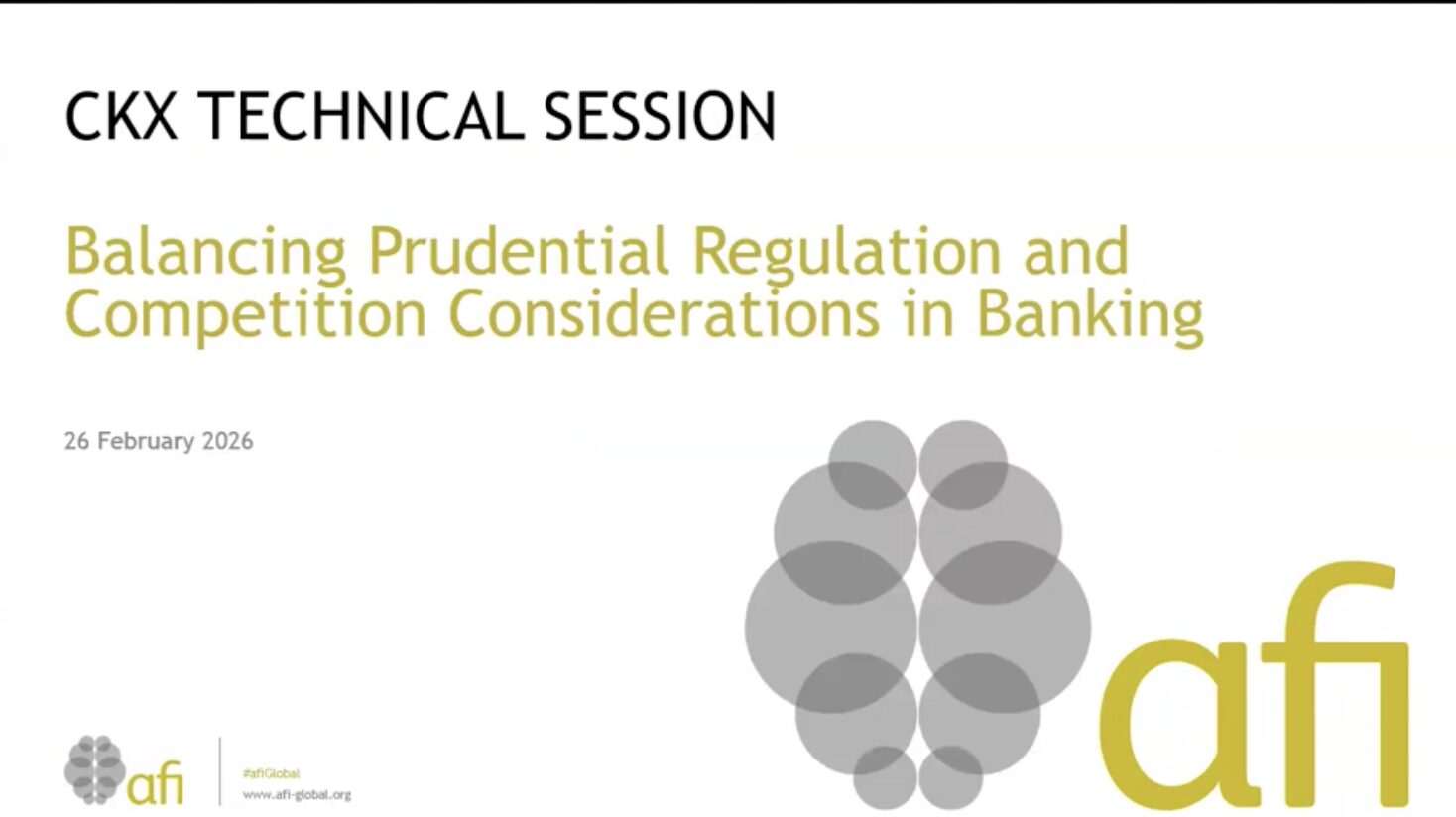
The Competition Knowledge Enablers Exchange (CKX) is an Alliance for Financial Inclusion (AFI) initiative, supported by the Gates Foundation, that provides a learning platform for financial regulators to advance competition in digital financial services (DFS). Since its establishment, CKX has generated a substantial body of knowledge through special reports, technical presentations, webinars, member experiences, and training materials covering topics such as competition policy, interoperability, digital public infrastructure, market regulation, consumer protection, and emerging technologies.
What CKX Offers
Knowledge Exchange: A space for regulators and experts to share insights, case studies, and best practices on competition in financial services.
Policy Development Support: Guidance on regulatory pathways and competition enablers that drive financial inclusion.
Capacity Building: Training programs and technical assistance to strengthen the ability of central banks and financial authorities to address competition challenges.
Collaboration & Stakeholder Engagement: Bringing together regulators, competition authorities, and industry players to create balanced, market-driven solutions.
CKX currently comprises 19 AFI member institutions, committed to fostering fair and competitive financial markets.
Current members include:
| Country | Member Institution |
| Bangladesh | Central Bank of Bangladesh |
| Brazil | Banco Central do Brasil |
| Egypt | Central Bank of Egypt |
| Fiji | Reserve Bank of Fiji |
| Ghana | Bank of Ghana |
| Kenya | Central Bank of Kenya |
| Mozambique | Banco de Moçambique |
| Nigeria | Central Bank of Nigeria |
| Pakistan | State Bank of Pakistan (SBP) |
| Peru | Superintendency of Banking, Insurance and AFP ( SBS ) |
| Philippines | Bangko Sentral ng Pilipinas |
| Rwanda | National Bank of Rwanda |
| Seychelles | Central Bank of Seychelles |
| Sri Lanka | Central Bank of Sri Lanka |
| South Africa | South African Reserve Bank |
| Tanzania | Bank of Tanzania |
| Uganda | Bank of Uganda |
| Zambia | Bank of Zambia |
| Zimbabwe | Bank of Zimbabwe |
This section provides foundational economic literature and policy briefs detailing how competitive market dynamics reduce transaction costs, drive financial inclusion, and expand service access for low-income and vulnerable populations.
- Advancing Fair Competition for Inclusive Digital Finance: Insights from Emerging Markets (AFI Special Report): Examines how pro-competitive policy tools remove barriers to market entry, lower end-user transaction fees, and stimulate private sector investment across AFI member jurisdictions.
- Advancing Competition for Financial Inclusion: Six Policy Considerations for Financial Sector Authorities (CGAP Focus Note): Outlines six policy considerations for central banks seeking to integrate market contestability objectives into national financial inclusion strategies.
- FAIR PLAY: Ensuring Competition in Digital Financial Services (Soursourian & Plaitakis, CGAP Working Paper): Foundational paper defining core competition bottlenecks in DFS, mapping market failures across distribution, payment rails, and customer interfaces.
- Competition for Financial Inclusion: A Conceptual Framework (CGAP Working Paper): Establishes an analytical model linking market conduct, structural concentration, and regulatory remedies to measurable changes in product choice and affordability.
- Digital Disruption in Banking and Its Impact on Competition (OECD Roundtable Paper): Evaluates how fintech and Big Tech entry alter traditional retail banking dynamics, unbundling financial products and challenging incumbent market power.
- Literature Review on Financial Technology and Competition for Banking Services (BIS / Academic Literature Synthesis): Comprehensive survey evaluating how fintech entry disrupts traditional retail banking models, lowers margins, and redefines market power.
- Thematic Overview: Economic Regulation and the Development of Telecoms, Mobile Money and Banking (AJIC Thematic Review): Analyses the convergence of telecommunications, mobile money networks, and commercial banking, emphasising joint regulatory oversight across network industries.
- Competition Among Banks and Mobile Money Providers (World Bank / CGAP Research): Investigates cross-modal competition between traditional deposit-taking institutions and non-bank electronic money issuers (EMIs) in developing retail payment markets. Competition Matters for Financial Inclusion
Focuses on market concentration, exclusive dealing, agent network exclusivity, essential input bottlenecks (e.g., USSD channels), e-money issuer rules, and mobile money market power.
- Competition in Digital Financial Services: Regulatory Strategies and Pathways for Emerging Markets and Developing Economies (CCAF Report): Maps regulatory tools against supply- and demand-side barriers in developing markets through a four-tiered structural framework.
- E-Money Competition Issues (World Bank Digital Finance Portal): Diagnostic synthesis of structural competition challenges specific to e-money platforms, including float management, agent lock-in, and interoperability mandates.
- Competition Aspects of Digital Financial Services (ITU-T Technical Report): Analyses telecom-DFS bottlenecks, emphasising non-discriminatory USSD access pricing, SIM channel access, and agent open-access rules.
- Should Mobile Money Agents Work for Multiple Networks? (CGAP Research Brief): Policy analysis of agent network exclusivity, demonstrating how non-exclusivity mandates boost network contestability and reduce distribution setup costs.
- Exclusionary Practices: The Economics of Monopolisation and Abuse of Dominance (OECD Competition Policy Paper): Economic foundation for identifying and prosecuting margin squeezes, refusals to deal, and tying/bundling in digital and network platforms.
Examines payment switch infrastructure, account-to-account interoperability, merchant discount rates (MDR), interchange fee antitrust investigations, and instant payment rails.
- Interoperability, Competition and Instant Payment Systems (TSE & AFI Technical Presentation): Explores how Instant Interoperable Payment Systems (IIPS) transform multi-sided platform economics, lower switching costs, and level the playing field for fintech entrants.
- Lessons Learned from the Interchange Fees Antitrust Investigations (Plaitakis, BFA Global Brief): Reviews antitrust litigation against card networks globally and provides key takeaways for regulating interchange fees and merchant discount rates in DFS.
- How Can Interoperability Drive Investment and Competition in Digital Payments? (TSE FIT IN Policy Brief): Evaluates how mandatory vs voluntary interoperability regimes affect early-stage private infrastructure investment and long-term market contestability.
- How Do Instant Interoperable Payment Systems Transform Modern Economies? (TSE FIT IN Research Synthesis): Synthesises empirical evidence on open-access, real-time payment rails acting as Digital Public Infrastructure (DPI) to stimulate broad digital adoption.
- Market Review of Card Scheme and Processing Fees: Interim Report (UK Payment Systems Regulator / FCA): Regulatory review examining scheme fee transparency, card network market power, and processing costs borne by merchants in retail payments.
- Enabling Digital Financial Inclusion through Improvements in Competition and Interoperability (Centre for Global Development Paper 065): Analyses regulatory setups and trade-offs between early-stage network build-out and mandatory open access across developing payment markets.
- Transfer365 Instant Payment System in El Salvador (AFI Case Study): This case study provides first-hand information on the implementation and operations of Transfer365, including the challenges faced, such as technical issues related to system integration and the need for extensive stakeholder engagement to ensure the system’s success.
Covers open banking/finance standards, API access rules, consumer data governance, algorithmic credit scoring, machine learning privacy frameworks, and data portability.
- Digital Data and Competition Issues in DFS (Plaitakis, BFA Global Brief): Analyses how data accumulation creates competitive moats, evaluating regulatory tools like open data mandates, data portability, and API standards.
- Moving Markets Toward Open Finance (CGAP Working Paper): Guidance on transitioning from basic Open Banking to comprehensive Open Finance ecosystems through standardised APIs and data-sharing rules.
- Consumer Protection for Open Finance (CGAP Technical Guide): Focuses on consent management, automated liability distribution, and data privacy safeguards in API-driven open finance environments.
- How Can Data Sharing Help Improve Access to Credit? (TSE FIT IN Policy Brief) Analyses how mandatory sharing of alternative data (e.g., utility bills, mobile money transactions) mitigates information asymmetries for unbanked borrowers.
- Big Data, Machine Learning, Consumer Protection and Privacy (Regulatory Discussion Paper): Examines the anti-competitive and consumer-harm risks posed by algorithmic profiling, price discrimination, and automated credit decisioning.
- FCA Feedback Statement on Big Tech in Financial Services (FS24/1) (UK Financial Conduct Authority): Feedback report analysing Big Tech entry into retail financial services, data asymmetry advantages, and potential gatekeeping behaviour in digital wallets.
- Competition, Fintechs and Open Banking (OECD Competition Policy Paper): Assesses the competitive impact of open data initiatives in retail banking, focusing on API access standards to prevent incumbent data hoarding.
- Policy Development and Implementation Guide for Inclusive Open Finance (AFI Guideline Note): provides a comprehensive framework for policymakers and regulators to design and implement inclusive data-sharing ecosystems—whether open banking, open finance, or broader open data regimes tailored to their unique contexts.
Focuses on modularising DFS, regulatory sandboxes, tiered licensing regimes, ex-ante digital platform oversight, Big Tech ecosystem governance, and proportional supervision.
- Modularization of DFS & Competition Issues (Plaitakis, BFA Global Brief): Examines how technology unbundles the banking value chain, creating modular layers (infrastructure, distribution, customer interface) with distinct competition dynamics.
- Regulatory Sandboxes: The Global Perspective (World Bank / CGAP Survey): Global benchmark of regulatory sandbox models, evaluating their effectiveness in lowering market entry costs and testing innovative DFS products.
- Regulatory Sandboxes and Financial Inclusion (CGAP Brief): Details how sandboxes can be designed specifically to assist early-stage inclusive fintechs in navigating complex regulatory requirements.
- How to Build a Regulatory Sandbox (CGD Practical Guide): Step-by-step operational manual for central banks on establishing eligibility criteria, risk testing safeguards, and exit strategies for sandboxes.
- Digital Platform Regulation: Making Markets Work for People (Yale Tobin Center Collection): Examines regulatory toolkits to curb self-preferencing, algorithmic price coordination, and killer acquisitions by dominant platforms.
- Policy Framework on the Regulation, Licensing and Supervision of Digital Banks (AFI Framework): This policy framework provides guidance contemplating strategies regarding digital banks, with a view of promoting financial inclusion.
- Innovative Regulatory Approaches Toolkit (AFI Toolkit): This toolkit aims to help policymakers better navigate the different benefits and risks that different types of innovation facilities can produce.
Covers cross-agency coordination between financial regulators and competition authorities, balancing prudential regulation with market contestability, joint MoUs, and market conduct supervision.
- Balancing Prudential Regulation and Competition Considerations in Banking (OECD Policy Paper, 2025): Explores the trade-offs and synergies between financial stability rules (capital requirements, resolution regimes) and pro-competitive market entry.
- Cross-Agency Collaboration Between Financial Regulators and Competition Authorities (AFI Working Group Paper) Overview: Practical guidance on drafting cross-agency MoUs, establishing formal coordination mechanisms, and conducting joint market inquiries.
- Competition and Consumer Policy in Digital Markets (OECD Paper No. 332): Examines the convergence of competition enforcement and financial consumer protection, addressing dark commercial patterns and choice architecture.
Actionable diagnostic frameworks, assessment toolkits, and decision trees for technical teams in central banks and competition authorities:
- A Decision Tree for Digital Financial Inclusion Policymaking (Claessens & Rojas-Suarez, CGD / AFI Diagnostic Tool): Interactive methodology enabling regulators to systematically identify binding supply- and demand-side constraints in payment, credit, and digital finance markets.
- A Decision Tree for Digital Payment Services: The Case of Mexico (CGD Country Case Study & Tool): Applies the decision-tree framework to Mexico’s retail payment ecosystem to diagnose KYC, agent network, and interoperability constraints.
- The Markets and Competition Policy Assessment Toolkit (World Bank Group Toolkit): A comprehensive manual for evaluating government regulations and market structures to identify anti-competitive restrictions.
- OECD Competition Assessment Toolkit (Volumes 1–3) (OECD Guidelines): Operational guidelines, technical principles, and checklists for conducting competition impact assessments of proposed laws and regulations.
Documented jurisdictional experiences, national market inquiries, regulatory interventions, and enforcement decisions across member countries:
Brazil:
- BMGF Regulatory Exemplars Country Report: Brazil (Dias, D., 2023) Overview: In-depth case study analysing Brazil’s transformative DFS reforms, including Central Bank-led open banking, Pix instant payment deployment, and payment institution licensing tiers.
Bank Competition, Cost of Credit and Economic Activity: Evidence from Brazil (Central Bank of Brazil Research): Empirical study demonstrating how increased banking competition and instant payments (Pix) reduce credit spreads and stimulate local economic activity.
Kenya:
- Competition and Regulation of Mobile Money Platforms in Africa: A Comparative Analysis of Kenya and Uganda (Paelo & Roberts, 2022 / AFI Presentation): Comparative assessment of mobile money evolution, analysing USSD access pricing, agent exclusivity bans, and inter-agency coordination.
- Mobile Payments Markets in Kenya, Tanzania and Zimbabwe: A Comparative Study of Competitive Dynamics and Outcomes (Robb & Vilakazi, 2016): A comparative study evaluating how different regulatory choices regarding agent networks and USSD access led to contrasting market structure outcomes.
- Measures Put in Place by CAK to Balance Effective Monitoring and Innovation Promotion of Digital Platforms (Competition Authority of Kenya Report) : Overview of Kenya’s regulatory tools, market monitoring frameworks, and sandbox collaboration mechanisms to oversee fast-moving digital platforms.
Mexico:
- Study of Competition and Free Market Access in Digital Financial Services (COFECE Report, 2024): Comprehensive market study by Mexico’s Federal Economic Competition Commission evaluating entry barriers, API standardisation, payment card clearing, and fintech regulations.
Peru:
- Co-Host Showcase & Member Training Materials (SBS Perú / AFI Showcase) Overview: Documents SBS Perú’s regulatory framework for card payment restructuring, agent rules, and compulsory interoperability mandates.
South Africa:
- Review of the Competition Commission Banking Enquiry (Competition Commission South Africa): Retrospective review of South Africa’s landmark 2008 banking inquiry, assessing its long-term impact on payment system access, interchange fees, and transparency.
- Bridging the Digital Divide in South Africa: Case Studies in Incumbency Versus Competition (CCRED Research): Examines how telecom and financial incumbents hinder the deployment of affordable digital services in township and rural economies.
Tanzania:
- Mobile Payments Markets in Kenya, Tanzania and Zimbabwe: A Comparative Study of Competitive Dynamics and Outcomes (Robb & Vilakazi, 2016): A comparative study evaluating how different regulatory choices regarding agent networks and USSD access led to contrasting market structure outcomes.
Uganda:
- The “Evolution” of Regulation in Uganda’s Mobile Money Sector (AJIC Issue 17): Analyses the regulatory evolution of Uganda’s mobile money market from early light-touch oversight to formal National Payment System licensing.
- Competition and Regulation of Mobile Money Platforms in Africa: A Comparative Analysis of Kenya and Uganda (Paelo & Roberts, 2022 / AFI Presentation): Comparative assessment of mobile money evolution, analysing USSD access pricing, agent exclusivity bans, and inter-agency coordination.
United Kingdom:
- Strategic Review of Retail Banking Business Models: Final Report (UK Financial Conduct Authority) Comprehensive market analysis evaluating retail bank profitability, free-if-in-credit banking models, switching friction, and challenger bank expansion.
Zimbabwe:
- Competition and Regulatory Issues in Emerging Mobile Payments Markets: A Case Study of Zimbabwe (Robb, Tausha & Vilakazi): Documents market power concentration in Zimbabwe’s mobile payments market and the regulatory remedies deployed to mandate interoperability.
- Mobile Payments Markets in Kenya, Tanzania and Zimbabwe: A Comparative Study of Competitive Dynamics and Outcomes (Robb & Vilakazi, 2016): A comparative study evaluating how different regulatory choices regarding agent networks and USSD access led to contrasting market structure outcomes.
- Complexities of competition regulation in Zimbabwe’s mobile money sector (Ncube, 2023): This study explores the complexities of competition regulation in Zimbabwe’s mobile money sector—through an analysis of EcoCash’s market position and practices, and the regulatory steps taken in response.
-


VideosPublication