
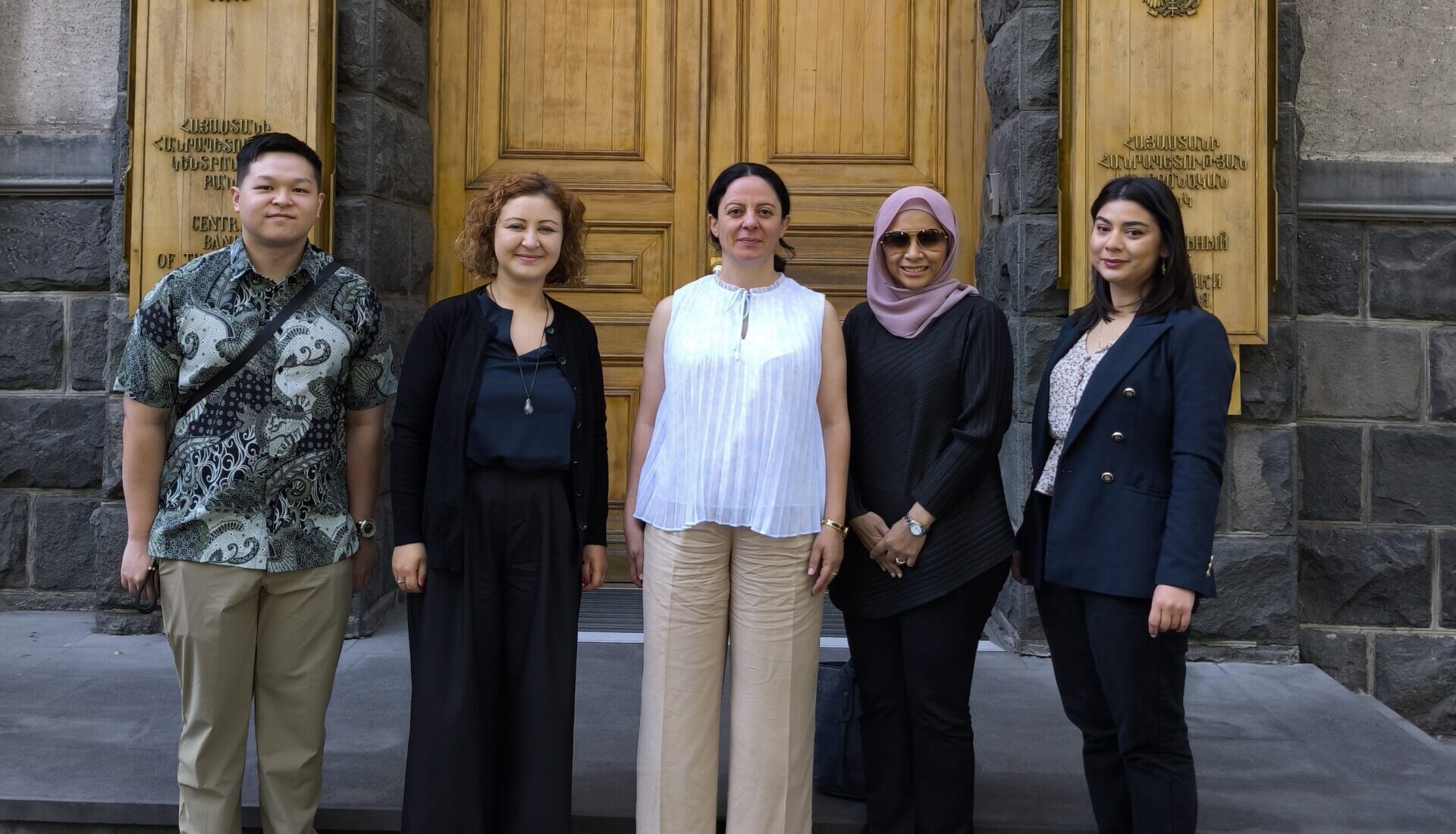
On 23rd of June, the Central Bank of Armenia (CBA) hosted staff from Bank Negara Malaysia for an AFI Peer Learning Exchange, designed to build Bank Negara’s capabilities in applying behavioral research to financial inclusion.
For several years, CBA has been successfully using behavioral research to design interventions that ‘nudge’ people towards better financial decisions, such as relating to savings, avoiding excess debt, or using digital financial services securely.
Bank Negara’s visit explored the rationale and structure behind CBA’s behavioural projects, identifying lessons learnt and recommendations. Bank Negara now plans to apply this knowledge by embedding behavioral research methodologies within the organization, with the aim of improving the financial resilience of Malaysia’s underserved communities.
“The visit of our Malaysian colleagues was an enriching exchange of ideas and perspectives,” said Araks Manucharyan, Head of the Financial Education and Inclusion Division at CBA’s Consumer Empowerment Center. “Together with experts from the UN SDG Lab, we explored how behavioral science can ethically guide people toward better financial choices. It was a reminder that learning is most powerful when it’s mutual, grounded in real-life context, and focused on empowering people.”
LEARN MORE: This short video reveals how the Central Bank of Armenia is applying behavioral insight to help rural communities embrace digital financial services.
You can learn more about CBA’s Consumer Empowerment Center in this interview.