
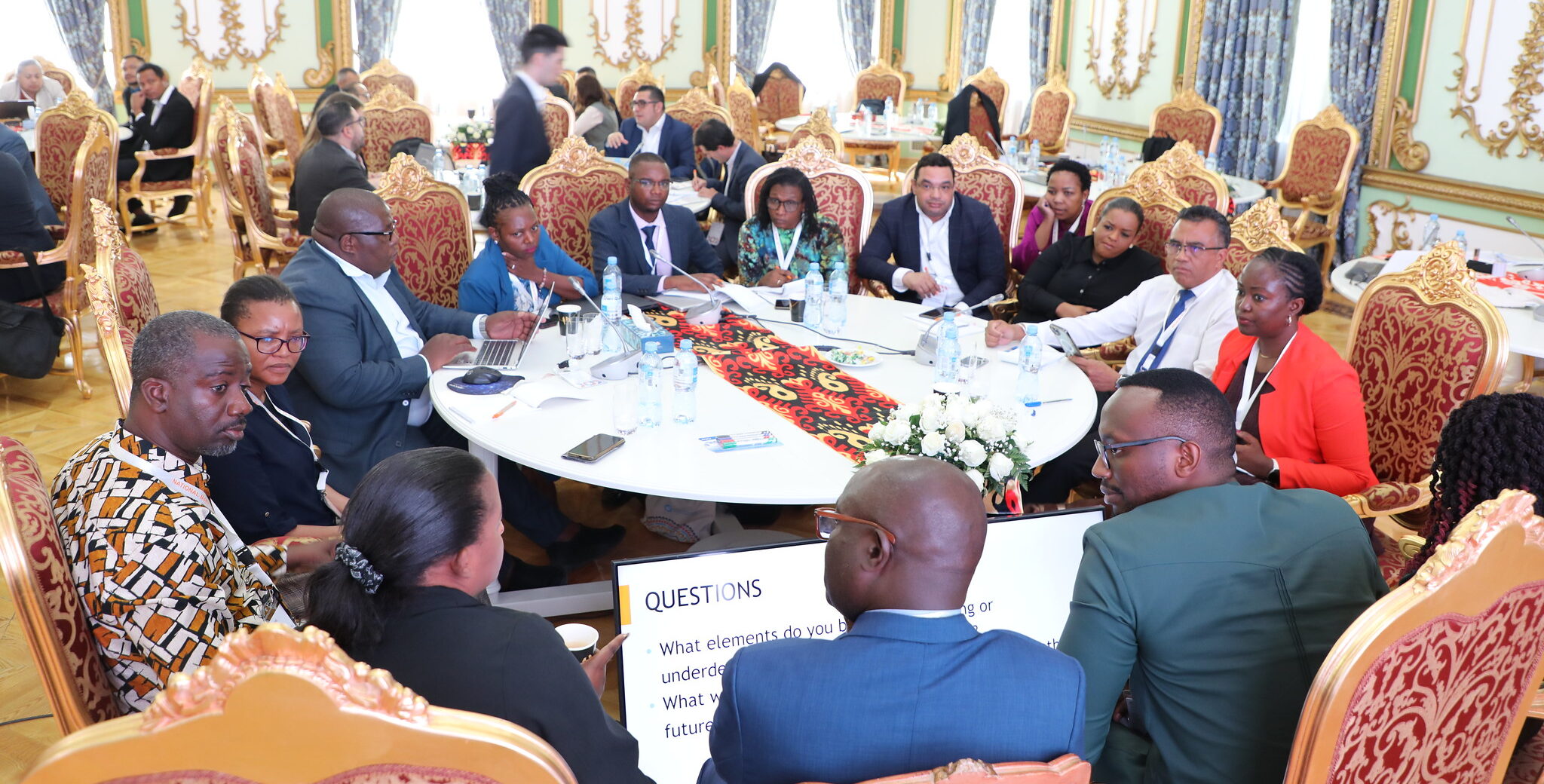
When AFI’s Digital Financial Services (DFS) Working Group met in Tajikistan, inclusive open finance was high on the agenda.
Open finance, which lets customers securely share their data with third parties, has clear potential to accelerate financial inclusion, and the discussions in Tajikistan built on the recent publication of AFI’s Policy Development and Implementation Guide for Inclusive Open Finance.
“It’s a crucial and timely topic,” said Dr Rasha Negm, Assistant Sub Governor, Central Bank of Egypt. “Open finance is going to reshape the financial ecosystem, and all AFI members are either drafting, exploring, or even issuing regulations in this area.”
“The ability to exchange data and information is important, but needs to be done in a comprehensive way, efficiently and safely,” said Carlos José Herrera Costa, Head of Payment and Securities at Banco Central de Reserve de El Salvador. “That will help us to have public policies with a much greater focus on financial inclusion, with a much greater focus on digitalization, and to promote competitive financial services in our countries.”
“Creating a cohesive regulatory framework to encourage innovation and to enhance access to finance will be critical,” said Hawwa Latheef, Assistant Executive Director at Maldives Monetary Authority. “We also need to focus on specifying minimum data criteria, data requirements, and specific baseline data to allow inclusivity,”
“Regulators need to be more visible on this issue, so that customers are more aware of it,” said Kiran Pandit, Nepal Rastra Bank. “People should be informed about consent, and withdrawal of consent, so that they can onboard new forms of fintech with confidence.”
“We’ve learnt through these discussions that one size does not fit all,” said AFI Policy Manager for Digital Financial Services, Adeyemi Omotoso. “We have to learn from each other and adapt that insight to our market context – looking at what already exists, and what banks and fintechs are doing, and thinking about how to complement or improve that. It means thinking about whether there is a need to standardize – and if so, who should take the lead, the regulator or the market.“
AFI’s discussions in Tajikistan benefited from the insight of Lauren Jones, Founder of GoodFin Consulting, who participated as a guest technical expert.
Learn more: To best serve financial inclusion, Open Finance must be country-led and flexible (Dr Alfred Hannig, CEO, Alliance for Financial Inclusion)