
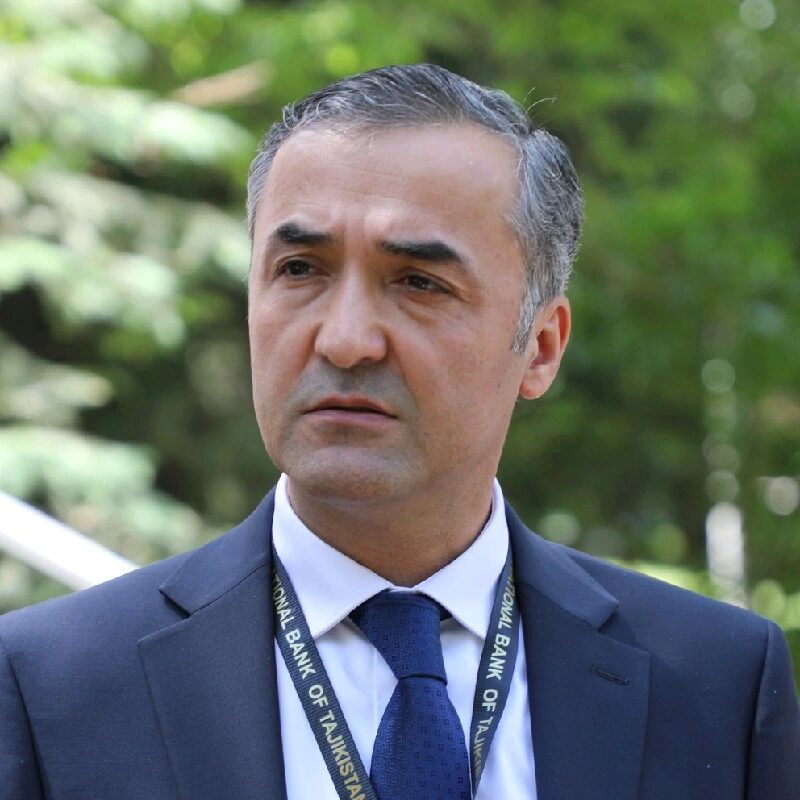
Firdavs Tolibzoda, Chairman, National Bank of Tajikistan
Over the last three years, the financial landscape in Tajikistan has shifted dramatically. Today, more people than ever are using financial services. Key banking indicators, such as attracting deposits and providing loans, opening accounts, and conducting non-cash transactions, have significantly increased.
Our financial system has become more integrated and stable, and its access network has expanded. There are 65 financial credit institutions, which has driven competition and the provision of modern services.
The benefits of taking a strategic approach to financial inclusion
Our National Financial Inclusion Strategy (NFIS) 2022-2026 has played a major role in advancing progress. It has four main areas: (1) delivery channels and digital financial services, (2) diversity of financial products, (3) protection of financial consumer rights, and (4) financial literacy. 90% of access-related indicators, and 81% of usage-related indicators, have already been achieved, and we’ve seen significant progress across a range of areas:
- 11-fold increase in the number of customers using mobile phones or the Internet to access an account
- Target for number of ATMs surpassed by 34%
- Target for number of electronic point-of-sale terminals surpassed by 14%
- Number of customers who made or received a digital payment increased by 260%
- Number of customers who made a utility payment using a financial institution account increased by 167%
The NFIS has a focus on empowering women and youth, and ensuring gender equality. During 2020-2024, banking institutions issued loans to women totaling over US$2 billion. Last year, 18,968 loans were made to women entrepreneurs, up 27% from the previous year. These loans have multiple benefits: they attract unemployed women to entrepreneurship, improve women’s well-being, and contribute to supplying the domestic market with domestic products.
Enabling and accelerating the shift to digital financial services
In 2022, the National Bank of Tajikistan introduced a unified QR code system, to provide an accessible, secure and efficient digital payments environment. Compliant with the international EMV standard (Europay, Mastercard, Visa), the system was ingrated into the national fast payment system in 2023.
That same year, a Presidential Decree required all payments for taxes, duties, and government services to be made exclusively through non-cash methods – a significant step toward strengthening the national payment infrastructure and reducing reliance on cash transactions. The launch of Google Pay in 2024 further advanced the digital payments ecosystem, letting users make cashless payments using smartphones equipped with NFC technology.
We have developed regulatory frameworks around digital financial services (DFS), including rules for remote identification and third-party identification (for opening an account and other services), uniform requirements for ensuring the interaction of bank payment cards, electronic wallets and the use of a single QR code. The range of services that can be provided through DFS channels has been defined, incentive packages for access networks to digital financial services have been developed, and the connection of e-commerce to centralized payment systems has been ensured.
As a result of the above, digital transactions are growing rapidly, nationwide. In the 6 months to June 2025, 56.3 million non-cash transactions worth over US$2 billion were carried out using electronic payment instruments (bank payment cards and electronic wallets), which is 34.9 % more in number and 51.0 % more in volume than the same period of the last year. And as more financial institutions integrate with Korti Milli (National card), Visa, Mastercard and UnionPay networks, the reach and impact of digital services will continue to grow.
The vital importance of financial literacy
As financial services become more accessible, it’s vital to ensure that people can use them safely and effectively. We are implementing a number of initiatives to promote the uptake of digital payments, and build citizens’ ability to make informed decisions about financial services, paying special attention to women and youth. Since 2023, the National Bank of Tajikistan and its partners have organized 25 financial literacy festivals, reaching over 62,000 people.
A free-to-access website, Fingram, contains teaching and learning materials covering the fundamentals of financial literacy, and financial literacy materials are shared on social media, including Facebook, Instagram, and Telegram, informational materials and videos on banking and insurance topics. Online courses on financial topics have been published and are available to everyone. Since 2022, NBT, credit financial institutions and insurance providers have conducted over 3,000 training events on financial literacy, reaching over 250,000 people.
To further improve financial literacy, as well as involve other state and private organizations in the process, a draft Government resolution “On the Program for Improving Financial Literacy of the Population for 2026-2030” has been prepared and will be submitted to the Government for approval by the end of 2025.
Tackling our remaining financial inclusion challenges
Over the past years, Tajikistan has made notable progress in advancing financial inclusion, supported by strong partnerships at the national and international levels. Nevertheless, we recognize that further efforts are required to ensure that the benefits of financial services reach all segments of the population in a sustainable and inclusive manner.
While our achievements are encouraging, several priority areas still demand attention. These include ensuring balanced access to financial services across regions, strengthening the legal and regulatory environment to support digital finance, and fostering the wider use of innovative technologies. We also see scope to increase the use of non-cash transactions, expand the range of financial products — including insurance — and enhance coordination between the public and private sectors. At the same time, building financial literacy, particularly among women, youth, rural residents, and low-income families, remains an important priority.
To address these challenges, the National Bank of Tajikistan, in close collaboration with our national stakeholders, will continue to focus on the development of innovative solutions. In the coming period, our priorities include:
- expanding access to financial services in remote and mountainous areas
- introducing mechanisms to improve the measurement of financial service usage
- enhancing opportunities for women, youth, SMEs, persons with disabilities, migrants, and low-income families
- raising the overall level of financial literacy
- promoting the growth of the FinTech sector
- strengthening the regulatory framework for consumer protection, with particular attention to digital financial services and insurance.
Building on the National Financial Inclusion Strategy 2022–2026, these initiatives are designed to foster sustainable, inclusive, and technology-driven financial development.
On behalf of the National Bank of Tajikistan, I would like to extend our sincere appreciation to the Alliance for Financial Inclusion (AFI) for its unwavering support since the very beginning of our membership. AFI has played a pivotal role in expanding financial access, advancing financial literacy, and enabling Tajikistan to learn from and contribute to global best practices.
Thanks to this valued cooperation, Tajikistan has benefited from knowledge-sharing, capacity building, and policy innovation in areas such as FinTech development, consumer protection, inclusive green finance, digitalization of financial services, and evidence-based policymaking. These efforts have contributed to a stronger regulatory framework and a more inclusive financial system that supports households, entrepreneurs, and small businesses across the country.
We deeply value our partnership with AFI and remain committed to working together to further enhance financial inclusion, empower vulnerable groups, and promote sustainable and innovative economic growth in Tajikistan.