

Sally Abdel Kader, General Manager – Financial Literacy Department, Central Bank of Egypt
In Egypt, young people represent 60% of our population – investing in their financial skills isn’t optional – it’s essential. And the earlier we start, the stronger their foundation for a financially healthy future.
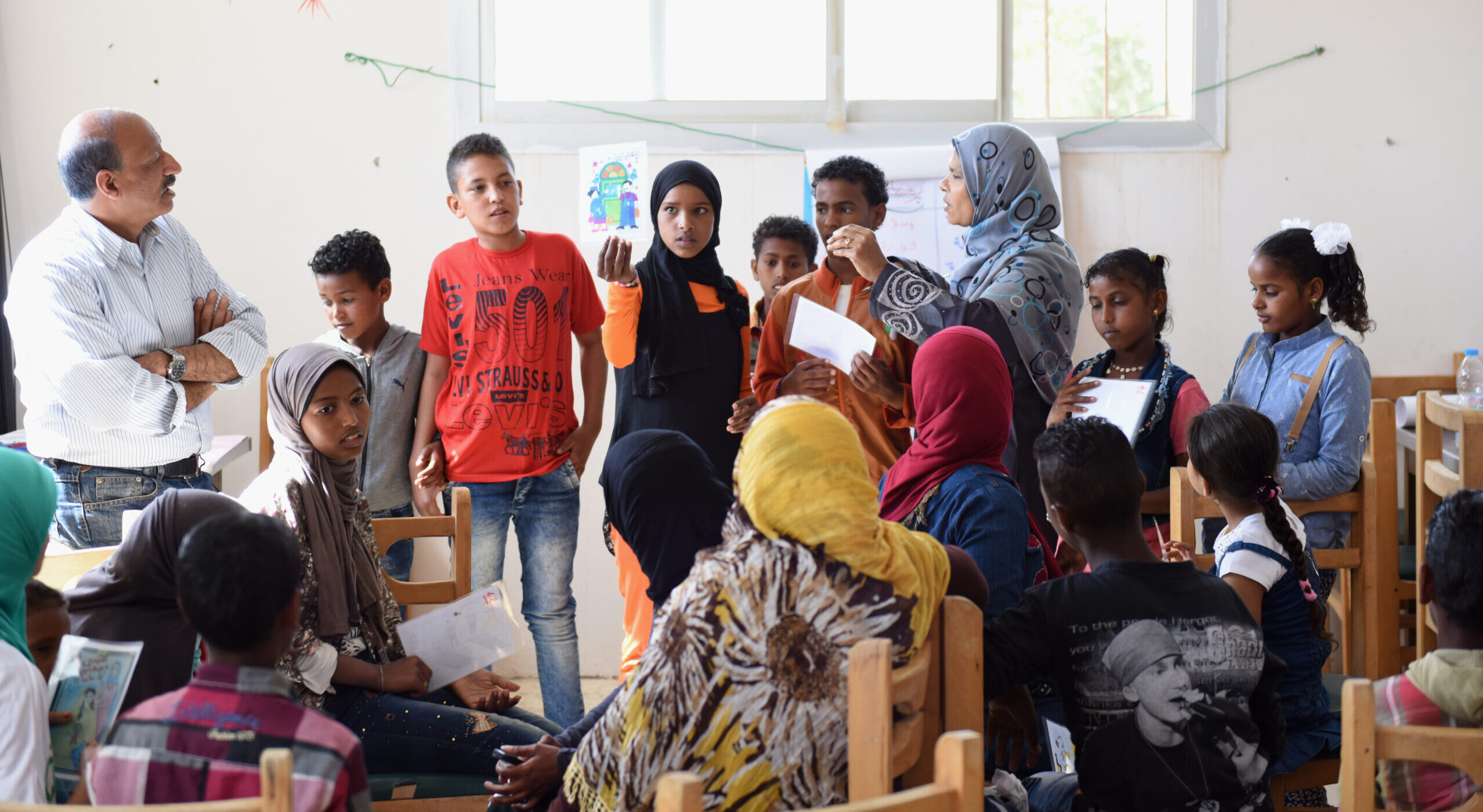
This is the vision behind the School Bank program initiative led by the Central Bank of Egypt in cooperation with the Ministry of Education. The program brings financial education directly into classrooms by embedding key aspects of financial education into the school curriculum, delivering 15 hours of hands-on learning throughout the school year.
When designing the content, we knew it had to be more than theory. It needed to be very interactive, so that lessons would be a pleasant experience for both teachers and children. We also wanted to leave room for creativity, providing flexibility in how people make use of the content.
After developing the content, we needed to train the trainers. As teachers already have a lot on their plate, many felt uncertain about teaching financial topics. Through dedicated training, we helped them understand the material and grow confident and comfortable presenting it in the classroom.
The strength of the School Bank project lies in its partners who we onboarded from an early stage. Alongside the Ministry of Education, NGOs and the banking sector play an integral role. Banks, in particular, enrich the experience by introducing simple financial products designed for young learners, giving students the chance to apply classroom lessons in a real-world context. This practical exposure amplifies the program’s impact well beyond school walls.
Already, we see the impact which the project is having outside of school. Pupils are acting as teachers themselves, sharing what they have learned with their families. They’re participating in household financial decisions – for example, before a trip to the supermarket, a child will help plan what the family needs, then accompany their parent to the shop, helping them to choose wisely, looking at special offers, comparing prices and expiry dates to spot any opportunities to save.
Having been involved with School Bank since the outset, my main recommendations for countries or central banks seeking to implement similar projects are:
- Think carefully about the type of content you want to deliver. The learning experience should be easy, interactive and enjoyable.
- Start small – you can adapt and refine pilot schemes as you scale up.
- Collaborate with the banking sector from an early stage. They can help by recruiting schools, by communicating directly with families of school children, and by offering adequate financial products.
- Similarly, bring in the Ministry of Education from a very early stage. Their buy-in will be vital to ensuring the project’s viability and sustainability.
I’m convinced that projects like School Bank can make an enormous contribution to financial inclusion. When we teach children how to save, plan, and budget, we’re giving them the tools to make informed, confident decisions. We’re building their (and their families’) resilience. We’re empowering them, setting them on the way to living financially healthy lives.