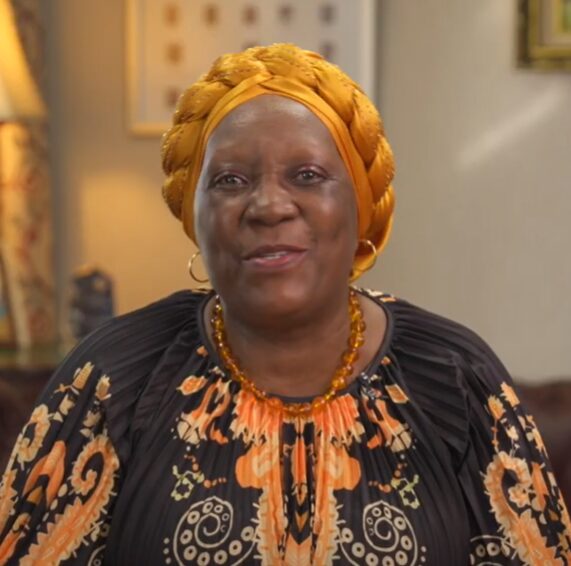
Dr. Jesimen T. Chipika, Deputy Governor, Reserve Bank of Zimbabwe
Women entrepreneurs are the lifeblood of Zimbabwe’s economy. Until recently, they struggled to access and use financial services. But today, things are very different. Let me explain where we came from, and how we got here.
In Zimbabwe, most micro, small and medium enterprises (MSMEs) are women-owned. MSMEs in Zimbabwe, the majority of which are owned by women, contribute 60% of our GDP, and therefore represent a key sector.
Historically, women entrepreneurs were largely excluded from formal financial services. Despite being enterprising and hardworking, they could not get financial backing. Women were not able to own property and therefore lacked the requisite conventional collateral which banks required in order to access loans.
Helping women-led MSMEs through policy initiatives
At the Reserve Bank of Zimbabwe, we dedicated ourselves to solving this problem.
First, we made sure that all banks installed women’s desks and SME desks in every branch. Previously, women were afraid to go into banks and explain their needs. Today, when they visit a bank, they are attended to by people who are sensitive to their situation.
Secondly, we created banking institutions that focus on the needs of women. The Zimbabwe Women’s Microfinance Bank serves communities not reached by conventional commercial banks, particularly rural women. EmpowerBank was formed to reach financially excluded youth, including young women, offering loans, asset finance, guarantees and savings accounts. The AFC Land & Development Bank serves small farmers in rural areas, most of them women. AFC offers bank accounts, loans, farming machinery and agricultural services.
Next, we introduced legislation to allow banks to accept movable collateral from marginalized groups, to access loans. Women can pledge household goods, small cars, fridges, or anything of value. As they build their relationship with their banks, they can graduate to bigger loans
This collateral registry has been a ‘game changer’ – it has literally changed the terrain of access to finance for women in Zimbabwe.
Finally, we created a credit guarantee scheme that provides risk protection to lenders, opening up access to loans for whole new populations.
Serving the wider sustainable development agenda
There can be no development in a country which leaves half the population out of the equation. If we want to grow our society, become an inclusive economy, and to meet the ambitious 2030 Sustainable Development Goals, women’s financial inclusion will be key.
When women are financially included, they can send their children to school. Their health, and the health of their families, improves. They create jobs. They create economic and social stability. We advance progress across all the SDG Agenda.
Preaching the gospel of financial literacy
An informed population can use financial products effectively. They can protect themselves from fraud. They can interact with wisely money in order to improve their lives.
But in Zimbabwe, we faced an anomaly. We’ve always been very proud of our education system. Academically, our population is very literate. But not when it came to financial services.
We knew that for financial inclusion to take root, we had to address this at all levels. We convinced our education sector to introduce financial concepts from kindergarten onwards. Today, financial literacy forms part of the curriculum at all levels – primary, secondary, and tertiary.
To supplement this, we run financial literacy campaigns, year-round, throughout the country. After initially focusing on young people, we now also target parents and grandparents. We use social media, radio, television, competitions in schools. We go to churches. Wherever women gather, we go.
A vital dimension is digital literacy. Financial services are increasingly, and in many cases purely, digital. We cannot let women, or any other group, remain digitally illiterate. Otherwise, they will be excluded from business, and be unable to handle any kind of financial matters.
Our vision and our commitment is to never again have a generation which doesn’t know what financial services are, or which cannot make smart decisions around money, loans, savings or investments.
Turning financial access into financial usage
Zimbabwe’s first National Financial Inclusion Strategy (NFIS), which ran from 2016 to 2020, had a focus on marginalized populations, including women, and on MSMEs. It concentrated on expanding access to formal financial services.
As a result of these efforts, women’s access to financing increased from 68% in 2014, to 83% in 2022. SME access to formal finance jumped from 18% in 2012 to 95% by 2022.
When we designed NFIS 2, while we wanted to continue expanding access to excluded groups, our main focus was on usage. We wanted to turn access into usage. That was the key to improving women’s lives, and helping them to grow their businesses.
Zimbabwe’s women, a precious national asset
Two decades ago, when we faced serious economic challenges, women left the country to work abroad, to help their families to survive. They enabled the little industry we had left in the country to survive, by bringing back spare machine parts. We appreciate and thank these illustrious women who made it through a very hard period.
Today, Zimbabwe’s women participate fully in the economy. They’re in every line of work, even in supposedly ‘male-dominated’ sectors like mining. They have proved there is nothing they can’t do. Having spent 40 years fighting for women’s rights, I now see it finally happening. It gives me great satisfaction.
Our country has incredible potential. Fertile land, minerals, tourist sites. A highly educated population. We are a peaceful nation. If we can harness women’s energy, wisdom and resilience, there is no reason why Zimbabwe cannot quickly become a developed country.
As I look forward, I’m excited.